

Reviewed by Thorsten Krick, Unrestricted Master Plumber & Co-Owner, TKO Plumbing Services
Quick answer: If your sewer line keeps backing up during normal household use, the cause is usually more than a simple clog. Recurring backups often point to a problem with the line itself, such as tree roots, cracked or shifted piping, improper slope, or a low spot (belly) that traps water and waste. Clearing the blockage restores flow, but a camera inspection is what reveals whether the pipe is healthy or something deeper needs to be addressed.
If you've had your main sewer line cleared only to have it back up again weeks or months later, it's reasonable to wonder: why does my sewer line keep backing up?
A main sewer stoppage can happen because of something that was put down the drain, such as feminine products, wipes, or excessive amounts of toilet paper. But if your sewer line repeatedly backs up during normal household use, there may be an underlying problem with the line itself.
At TKO Plumbing Services, we believe getting your sewer line flowing again is only the first step. Whenever we clear a main sewer line stoppage, we also camera the sewer line at no additional charge to help determine why it backed up in the first place.
How Do I Know if My Main Sewer Line Is Backing Up?
A slow sink or a single clogged toilet doesn't necessarily mean you have a problem with your main sewer line. When the main sewer line becomes blocked, homeowners may notice problems affecting multiple fixtures throughout the house.
Common signs include:
- Toilets that won't flush properly
- Water backing up into a bathtub or shower
- Gurgling toilets
- Multiple drains becoming slow at the same time
- Sewage or wastewater coming up through a lower-level drain
- A blockage that returns after the line has already been cleared
One of the most common situations we see is a homeowner flushing a toilet and then noticing water coming up into the bathtub or shower. That's a strong indication that the problem may be farther downstream in the home's main sewer line.
Why Does My Sewer Line Keep Clogging?
There isn't one answer for every home.
Sometimes the cause really is a soft blockage, such as toilet paper, waste, wipes, feminine products, or another material that has accumulated inside the line.
Other times, clearing the blockage reveals a bigger problem. We may find:
- Tree roots entering the sewer line
- Cracked or broken sewer piping
- A section of pipe that has shifted
- Improper slope
- A belly or low spot in the sewer line that holds water and waste
- Deteriorated older piping
- Foreign objects or materials that should not have been flushed
This is why knowing that a sewer line was clogged doesn't necessarily tell us why it clogged.
Should a Sewer Line Ever Back Up?
A properly installed and functioning sewer line should be able to carry normal household wastewater and toilet paper away from your home without repeatedly backing up.
However, even a properly installed sewer line can become clogged when items are flushed that aren't intended for the sewer system. Feminine hygiene products, wipes (even products marketed as "flushable"), large amounts of toilet paper, paper towels, and foreign objects can create a blockage in an otherwise healthy sewer line.
That's an important distinction. If we camera the line and find healthy piping with no structural problems, the blockage may simply have been caused by what went down the drain. If the family has been using the plumbing normally and the sewer continues to back up, however, we want to know why.
Why Does TKO Camera the Sewer Line After Clearing a Main Stoppage?
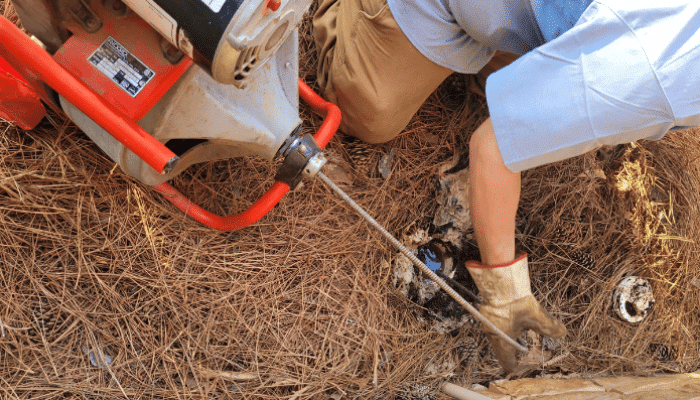
When we have to bring out our large sewer machine to clear a main sewer stoppage, we camera the sewer line afterward at no additional charge to the customer.
The sewer machine can restore flow, but it can't show us the condition of the pipe. The camera allows us to look inside the sewer line after it has been cleared and determine whether we're dealing with a simple soft blockage or whether there is another problem that could cause the line to back up again.
For example, we may discover roots growing into the pipe, a damaged section of sewer line, a low spot holding water, or deteriorated piping. Or we may find absolutely nothing wrong with the sewer line. That's useful information too.
If the pipe looks good and the blockage appears to have been caused by excessive paper or something that shouldn't have been flushed, the homeowner may not need any additional plumbing work at all. Our goal isn't to find a repair to sell. Our goal is to find out why the sewer backed up.
Clearing a sewer line and diagnosing a sewer line are two different things. A sewer machine can clear the blockage and get everything flowing again, but that doesn't necessarily tell us what caused the blockage.
That's why I recommend putting a camera through the line after a main sewer stoppage has been cleared. If the sewer line is installed correctly, is in good condition, and is being used normally, it should not repeatedly back up.
Sometimes the camera shows us a problem that needs attention. Other times it shows us a perfectly healthy sewer line and confirms that the stoppage was simply caused by what went down the drain. Either way, the homeowner deserves to know.
Thorsten KrickUnrestricted Master Plumber & Co-Owner
What Should I Not Flush Down the Toilet?
The safest rule is simple: human waste and toilet paper are what your toilet and sewer system are designed to handle.
Items that commonly contribute to sewer stoppages include feminine hygiene products, wipes, paper towels, excessive amounts of toilet paper, and other foreign objects. "Flushable" on the package also doesn't necessarily mean an item will break down inside your sewer line the same way toilet paper does.
Do Tree Roots Really Cause Sewer Backups?
Yes. Tree roots naturally seek moisture and can enter a sewer line through cracks, damaged joints, or other openings. Once inside, they can continue growing and catch toilet paper and waste as it passes through the pipe.
Removing the roots may restore flow temporarily, but if the pipe itself is damaged, the roots can return. A sewer camera helps us see whether roots are present and, more importantly, how they're getting into the line.
Does a Recurring Sewer Backup Mean I Need a New Sewer Line?
Not necessarily. A sewer backup does not automatically mean your sewer line needs to be replaced. That's one of the reasons the camera inspection is so important.
If the piping is in good condition and we find no structural problems, there may be nothing to repair. If we do find damage, we can show the homeowner what we're seeing and discuss the available options. The condition of the sewer line, not simply the fact that it clogged, should help determine what happens next.
You Ask. We Answer.
Frequently Asked Questions About Sewer Line Backups
If only one sink, tub, or toilet is having a problem, the blockage may be isolated to that fixture or branch drain. If multiple fixtures are affected, especially if flushing a toilet causes water to back up into a tub or shower, the main sewer line may be blocked.
It depends on what caused the stoppage. If the blockage was caused by toilet paper or another soft obstruction and the sewer pipe is otherwise healthy, clearing the line may solve the problem. If tree roots, damaged piping, improper slope, or another structural problem caused the blockage, clearing it restores flow but doesn't necessarily correct the underlying problem.
We strongly recommend it. At TKO Plumbing Services, when we use our large sewer machine to clear a main sewer line stoppage, the sewer camera inspection is included at no additional charge. We want to know why the line stopped up, not just get the water flowing again.
No. Sometimes a sewer line backs up because something went down the drain that shouldn't have. That's why one stoppage alone doesn't necessarily mean the sewer pipe is damaged. A camera inspection helps distinguish between a blockage caused by normal or abnormal use and a problem with the sewer line itself.
Final Thoughts
A main sewer backup is unpleasant enough the first time. When it keeps happening, simply clearing the blockage over and over isn't answering the most important question: why does it keep backing up?
Sometimes the answer is simple. Too much toilet paper, wipes, feminine products, or another foreign object caused a blockage in an otherwise healthy sewer line. Other times, the camera reveals roots, damaged piping, improper slope, or another problem that needs to be addressed.
That's why at TKO Plumbing Services, when we use our large sewer machine to clear a main sewer stoppage, we don't consider the job finished when the water starts flowing again. We camera the sewer line at no additional charge so we can help determine what caused the stoppage in the first place.
Meet the Plumber Behind This Advice
Thorsten Krick is the unrestricted Master Plumber and co-owner of TKO Plumbing Services. With more than 28 years of plumbing experience, Thorsten has diagnosed drain and sewer problems in homes and businesses throughout Dallas, Marietta, and Northwest Metro Atlanta.
His approach to sewer stoppages is straightforward: clear the blockage, inspect the line, and give the homeowner the information they need to make an informed decision about what, if anything, needs to happen.